Next Thursday’s quarter-final match-up between Rayo Vallecano and Greece’s AEK Athens might initially appear to be a standard European knockout fixture. While the teams boast contrasting club colors, distinct European legacies, and occupy different standings in their domestic leagues, a deeper look reveals a more intricate story.
Both clubs, established in 1924, quickly became emblems of pride within their close-knit, working-class neighborhoods. Their founding locations were significantly influenced by migratory patterns: Vallecas provided a home for numerous Spanish workers relocating from rural regions, while Nea Filadelfeia served as a sanctuary for Greeks escaping the ‘Asia Minor Catastrophe’. The historical roots of both teams are also reflected in their emblems; Rayo’s crest features the Vallecas coat of arms, signifying the district’s historical autonomy from Madrid, whereas AEK proudly displays the double-headed eagle, a powerful symbol of the Byzantine Empire.
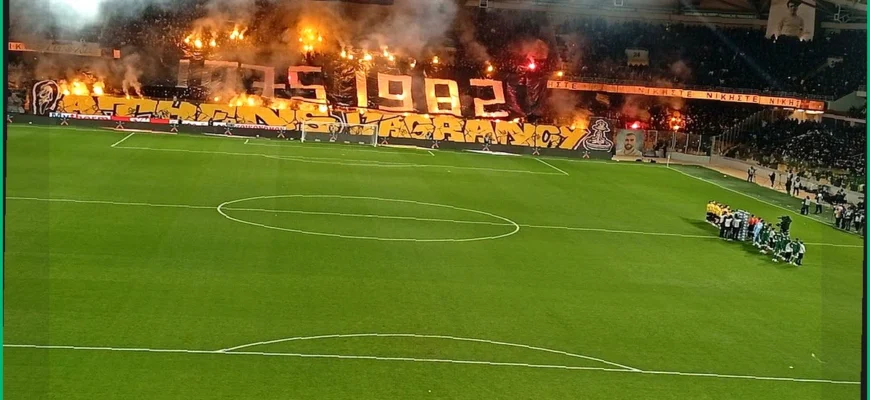
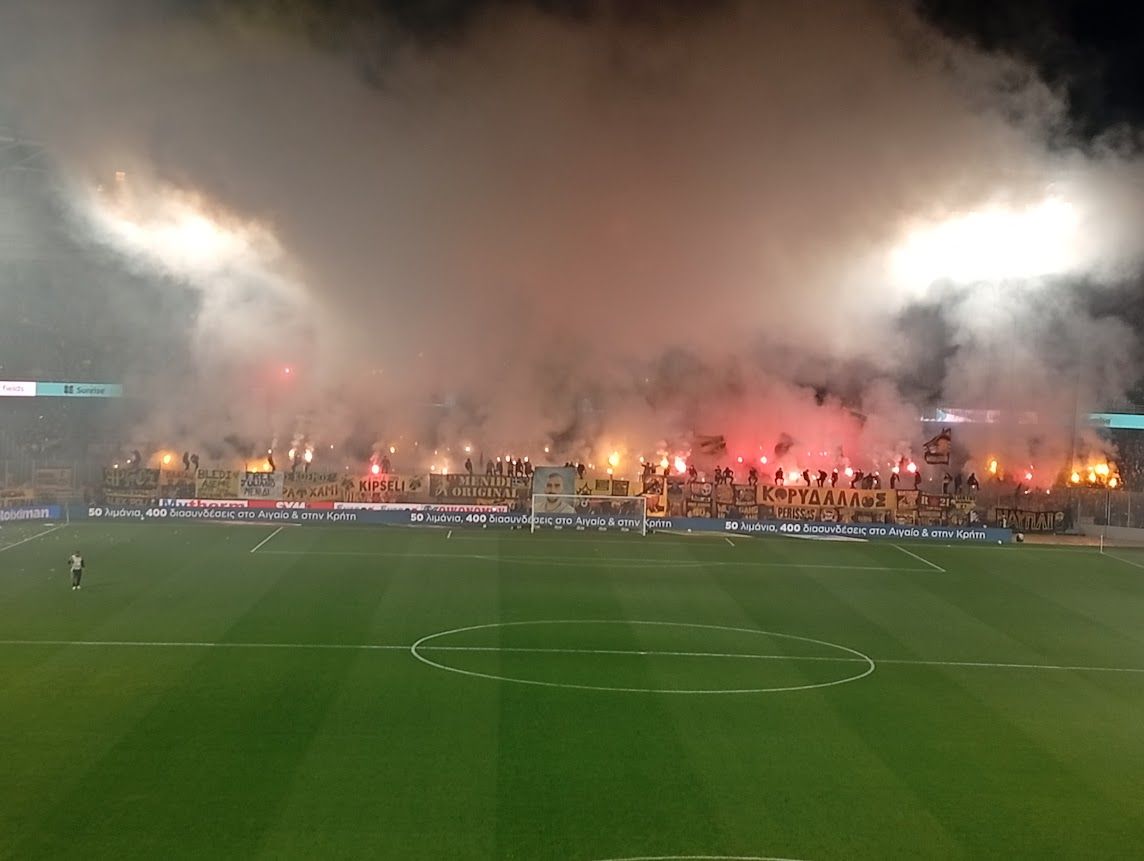
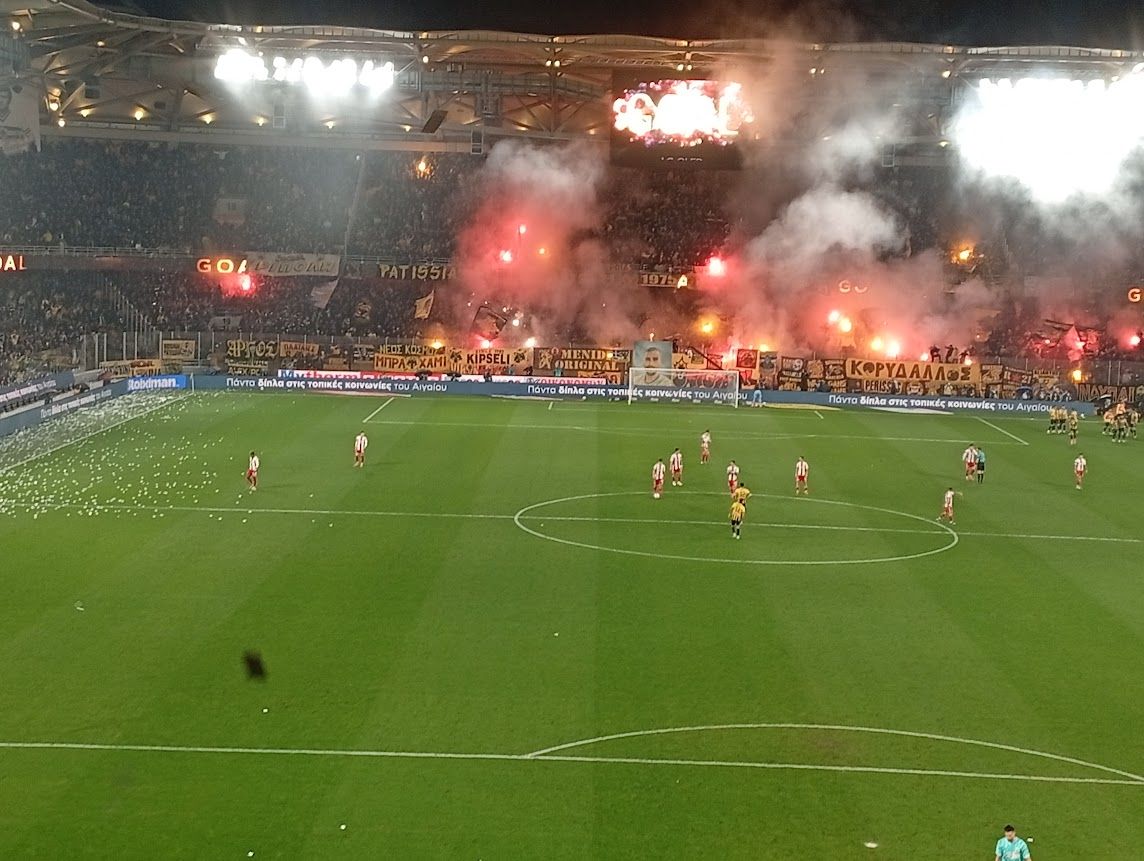
Today, these distinct identities are championed by their respective ultra groups: Bukaneros for Rayo and Original 21 for AEK. Both groups are rooted in left-wing ideologies, regularly expressing anti-fascist and pro-Palestinian sentiments, and are considered the vital core of their fanbases. Their unwavering loyalty has been evident through periods ranging from the depths of the third division to the pinnacles of European knockout competitions.
However, the similarities between the two clubs diverge sharply at this point. Rayo has faced relegation four times in the current century alone, in stark contrast to AEK, which has only been relegated once throughout its history. Following their relegation in 2013, AEK made the strategic decision to descend directly to the third division to clear its substantial debt. Since rejoining the top flight in 2015, AEK has secured two league titles and participated in the main stages of all three major European club competitions on five occasions.
AEK’s Tactical Approach
The current season was intended as a fresh start following the departure of Matias Almeyda, who was recently dismissed as Sevilla manager. Almeyda had achieved a domestic double in his inaugural season with AEK by implementing an aggressive, high-tempo style designed to press opponents deep in their own territory. Despite that initial success, his final season was catastrophic, seeing the team eliminated from Conference League qualifiers by Armenian club Noah and suffering defeats in all six Championship play-off matches.
Serbian coach Marko Nikolić assumed control during the summer, tasked with rebuilding the squad and reinstilling player confidence. He successfully guided the team through all three Conference League qualifying rounds, leading the club into the Championship play-offs at the top of the table. In the Conference League group stage, AEK secured a third-place finish, two positions ahead of Rayo, thereby earning the crucial advantage of hosting the return leg at home.

AEK holds another significant advantage: their schedule is clear of a domestic league match between the two legs against Rayo, thanks to Orthodox Easter Sunday. In European away fixtures, the Greek side has notched notable wins against Samsunspor and Fiorentina, complemented by a convincing 4-0 triumph over Celje in Slovenia during the round of 16.
Nikolić implements a flexible 4-2-2-2 system when his team is in possession, designed to generate numerical superiority in the half-spaces and disorient opponents through continuous positional interchanges. The team also boasts fast wingers capable of altering a match’s momentum with their individual dribbling prowess, further enhancing the team’s offensive capabilities. The most prominent player in the squad is former Real Madrid forward Luka Jović, who has been performing outstandingly.
Jović’s current league goal count is just one short of his personal best of 17, and alongside January acquisition Barnabás Varga, they have forged an impressive attacking duo. Jović prefers to drop between defensive lines to carry the ball forward or link up with midfielders, while Varga excels at converting crosses and set-pieces, having contributed six goals and two assists.
Defensively, AEK initially utilized a passive 4-4-2 mid-block within their own half, a strategy Nikolić soon modified. As demonstrated effectively in their victory over Fiorentina, AEK can dynamically switch to a 4-2-4 man-to-man pressing scheme during matches to induce turnovers. Furthermore, players began adopting higher pressing positions, notably in their away game against title contenders PAOK, while also showing the ability to rapidly revert to a deeper defensive shape during transitions.
AEK performs more effectively when they dictate the game’s tempo and initiate transitions using quick, central combinations. The ‘controlled chaos’ approach favored under Almeyda no longer aligns with their style, a point evident in their 3-2 win against Universitatea Craiova.
In that match, the Romanian opponents employed a high defensive line and adopted a rapid, direct football style, somewhat akin to Rayo’s method of generating counter-attacks by swiftly moving the ball forward. The gaps behind Craiova’s defense enticed AEK to attempt quick, vertical passes rather than methodically constructing their attacking plays. Consequently, the Greek side struggled to counterpress effectively and found themselves susceptible to rapid transitions, ultimately falling behind 2-0 by the 70th minute.
The match also underscored a primary vulnerability in the current squad: the lack of a dedicated defensive midfielder. While former Celta Vigo player Orbelín Pineda has revitalized his role as a deep-lying playmaker, expertly breaking opposition lines with his passing and dribbling, this critical function inherently carries risks, often providing opponents with opportunities to regain possession high up the pitch. Additionally, AEK’s full-backs have shown a tendency in recent matches to concede possession under pressure, a weakness that Iñigo Pérez could potentially target.
AEK remains a work in progress, with the collective vision of coach Nikolić and sporting director Javier Ribalta still unfolding. Ribalta has indicated that the team is not expected to reach its optimal form and address all current shortcomings until next summer. Conversely, Rayo operates as a highly organized unit under Pérez, displaying a distinct tactical identity on the field. Their well-known primary weakness, however, has been the absence of a prolific striker capable of consistently converting the numerous crosses delivered into the box by his teammates. Nevertheless, if Rayo can stifle AEK at home and assert their relentless playing style, the Greek team’s perceived advantages could be neutralized.
This promises to be an intriguing encounter, featuring two teams vying for a seldom-seen opportunity. Rayo is participating in only its second European campaign in history, whereas AEK harbors aspirations of reaching its first European semi-final since 1977.