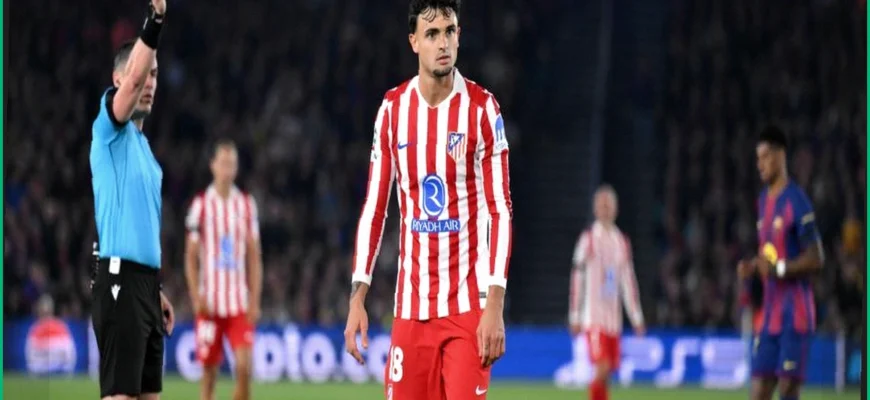
Barcelona expressed deep dissatisfaction following their 2-0 defeat to Atletico Madrid in the Champions League quarter-final first leg at Camp Nou on Wednesday night. Their anger was directed primarily at the referee’s decisions, not their own performance. While Pau Cubarsi’s red card and Julian Alvarez’s subsequent free-kick goal significantly impacted the game, the Catalan club was particularly aggrieved by what they believed was a clear penalty denied in the second half.
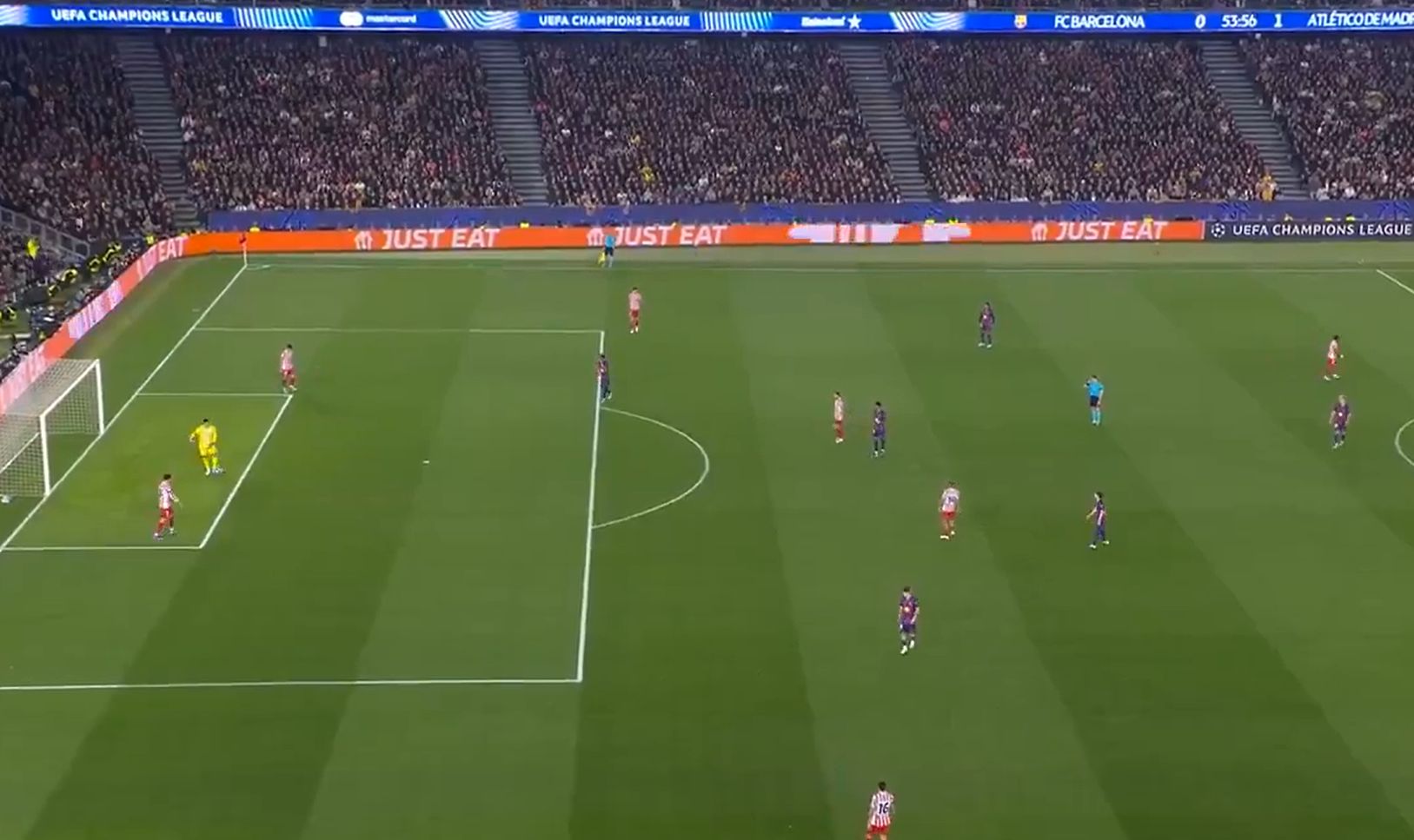
The controversial moment arose when Atletico’s goalkeeper, Juan Musso, initiated a goal-kick by passing the ball to defender Marc Pubill within the six-yard box. Pubill then used his hand to control the ball before returning it to Musso, who continued play. Barcelona players immediately protested, claiming a handball.
Reactions to the incident varied sharply. Juan Musso, the Atletico goalkeeper, reportedly dismissed the penalty claim as absurd. Marcus Rashford, meanwhile, stated unequivocally that there should be no debate about it being a handball. Barcelona’s coach, Hansi Flick, was visibly enraged by the referee’s call, questioning the utility of VAR if such incidents aren’t reviewed. Conversely, Atletico’s manager, Diego Simeone, defended the decision, describing it as a matter of ‘common sense’ to not award a penalty.
IFAB Rules on Goal-Kicks and Handball Explained
An examination of the rules suggests that Barcelona’s claims might be justified. According to publications like Sport and MD, IFAB’s Law 16, pertaining to goal-kicks, outlines the following provisions:
– The ball must be stationary and kicked from any point within the goal area by a defending player.
– The ball is considered in play once it is kicked and visibly moves.
– Opposing players must remain outside the penalty area until the ball is in play.
If, after the ball is in play, the kicker touches the ball again before another player, an indirect free kick is awarded. However, if the kicker commits a handball offence:
- A direct free kick is awarded.
- A penalty kick is awarded if the offence occurs within the kicker’s own penalty area, unless the kicker is the goalkeeper, in which case an indirect free kick is awarded.
The crucial point here is that Marc Pubill, a field player, handled the ball inside his own penalty area after it was put into play by the goal-kick. While there was some discussion regarding whether Barcelona’s Lamine Yamal had prematurely entered the penalty area, this would only become relevant after the goal-kick was deemed ‘in play’ by Musso, from Barcelona’s perspective.
Barcelona’s Intent to Lodge Official Complaint with UEFA
Sport reports that Barcelona is contemplating sending an official letter of complaint to UEFA to formally express their displeasure with the refereeing decisions. However, this action is largely symbolic, as UEFA typically has a dedicated referee assessor at every match who files a comprehensive report on incidents. While UEFA would likely respond to the Catalan club out of courtesy, it is improbable that such a complaint would result in any retrospective action or change in decision.
Historical Precedents and VAR’s Role
Cadena SER has pointed out several historical precedents for similar situations. In an Argentine league match between Independiente and Colon, a referee initially missed a similar handball incident but awarded a penalty after a VAR review. Another instance occurred in the 2024 Champions League during a match between Club Brugge and Aston Villa, where Club Brugge was awarded a penalty after Tyrone Mings handled the ball following a pass from goalkeeper Emiliano Martinez.
Conversely, in a different incident later in 2024, during an Arsenal vs. Bayern Munich Champions League fixture, David Raya passed the ball from a goal-kick to Gabriel Magalhães inside the six-yard box, and Gabriel then picked it up and passed it back to Raya. In this case, the referee opted for a retake of the goal-kick rather than awarding a penalty.