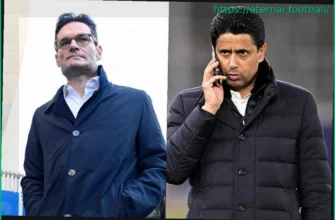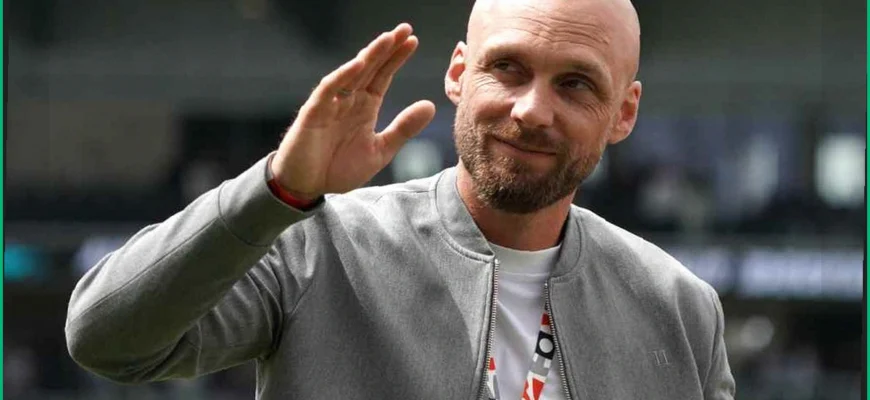
Borussia Dortmund is undergoing a significant leadership change following a season marked by frustration and a likely absence of trophies. CEO Hans-Joachim Watzke has openly voiced his disappointment, particularly with the nine-point gap separating BVB, currently in second place, from Vincent Kompany’s Bayern Munich—a lead considered insurmountable for the 2025/26 season. With 14 years having passed since their last league title, fans are yearning for success, yet Watzke’s current expectations are modest: “The way the team are playing right now, second-place would be a huge achievement, a Champions League finish is the minimum target, however.” This widespread dissatisfaction, shared by Watzke who has been central to the club’s rise since 2005, signaled that changes were imminent for the 2026/27 season.
- The Impact of Missed Titles: Sebastian Kehl’s Departure and Ole Book’s Arrival
- Goodbye, Captain Kehl: The Circumstances of His Departure
- Sebastian Kehl’s Formidable Inheritance
- What Kehl Inherited and His Performance as Sporting Director
- Sebastian Kehl’s Transfer Record: Hits and Misses
- Key Signings
- Significant Player Sales During Kehl’s Tenure
- Beyond Kehl: A Deeper Malaise at Borussia Dortmund?
- Budget Constraints and Strategic Vision
- Kehl’s Next Chapter and BVB’s Future
- What’s Next for the Eight-Time German Champions?
The Impact of Missed Titles: Sebastian Kehl’s Departure and Ole Book’s Arrival
The club acted decisively on Sunday, announcing the immediate departure of former captain and Sporting Director Sebastian Kehl. His tenure, ultimately deemed unsuccessful in delivering titles, led to a swift change. Taking his place is Ole Book, the highly regarded Sporting Director from 2. Bundesliga high-flyers SV Elversberg 07.
Book, who has signed a contract at the Westfalenstadion until 2029, is celebrated as a key architect behind Elversberg’s remarkable ascent from the fourth tier Regionalliga to the Bundesliga Play-offs. Hailing from Beckum, just 45 miles from Dortmund, Book’s career trajectory saw him evolve from scout and analyst to board member. He is known for his knack for identifying outstanding young talent and leveraging strategic loans, a strategy that has been credited for the success of players like Nick Woltemade, Fisnik Asllani, Younes Ebnoutalib, Robin Fellhauer, and Paul Wanner. While this appointment is a bold move, bringing in a proven visionary, it also introduces a director with limited top-flight experience.
Goodbye, Captain Kehl: The Circumstances of His Departure
Borussia Dortmund officially announced the departure of former captain and Sporting Director, Sebastian Kehl, on Sunday. Managing Director Lars Ricken clarified the decision, stating, “In a very open discussion, Sebastian Kehl, CEO, Carsten Cramer, and I came to the shared conclusion that the summer is the right time for changes. To allow both sides to prepare, we mutually agreed to an immediate termination of Sebastian’s contract.” Ricken expressed profound gratitude for Kehl’s “enormous contribution” and highlighted their shared history, including winning the German championship together in 2002.
Kehl himself acknowledged the decision, saying, “Borussia Dortmund has been a part of my life for half my life, and I have an extremely strong connection to this great club. Nevertheless, we have now jointly come to the conclusion that it’s time to move forward – both for BVB and for me.” Kehl’s extensive history with the club spans 13 years as a player (2002-2015), followed by roles as head of the professional players’ department (2018) and Sporting Director (2022). Notably, he played a part in the Black-Yellows’ journey to the 2024 Champions League final, where they ultimately fell to Real Madrid at Wembley.
Sebastian Kehl’s Formidable Inheritance
The question of whether Sebastian Kehl was afforded sufficient time to establish his legacy as Sporting Director is complex, especially given the immense shoes he had to fill. After earning his UEFA A coaching badge post-retirement in 2015, a leadership role at Dortmund was widely anticipated for the respected former captain. In 2018, he was appointed head of professional football, groomed as the successor to Michael Zorc. When Zorc, the club’s record player, departed in the summer of 2022, Kehl officially stepped into the Sporting Director role. Zorc’s 24-year tenure had seen Dortmund achieve significant triumphs, including three league titles, three DFB Pokal wins, and two Champions League finals, setting an incredibly high benchmark.
What Kehl Inherited and His Performance as Sporting Director
While Kehl provided some stability in his initial leadership role, his tenure as Sporting Director saw varying fortunes. The period since 2018 has witnessed a revolving door of coaches—Peter Bosz, Peter Stöger, Lucien Favre, Edin Terzić, Marco Rose, Terzić again, and Niko Kovac—indicating a lack of long-term strategic coherence. Over the last four years, despite moments of inspiration, the singular DFB Pokal win in 2021 stands out as the only major silverware, falling short of the club’s ambitions.
Sebastian Kehl’s Transfer Record: Hits and Misses
Kehl’s performance as Sporting Director is best evaluated through his transfer activities, which present a mixed bag of success and costly errors:
Key Signings
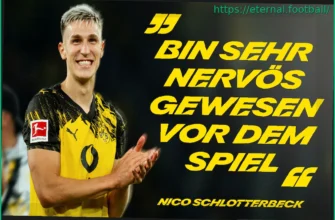
- Nico Schlotterbeck (€20m from Freiburg): An undisputed success. The Germany international has established himself as one of Europe’s top young defenders, a crucial asset in BVB’s backline.
- Julian Ryerson (€5m from Union Berlin): Another excellent signing. The Norwegian right-back’s energy, skill, and determination have made him a fan favorite and a consistently high performer.
- Jamie Gittens (€4m from Reading): A shrewd piece of business. Gittens rapidly ascended through the youth ranks to the first team, showcasing brilliance before a lucrative €65m transfer to Chelsea.
- Serhou Guirassy (€18m from Stuttgart): A prolific goalscorer, his 56 goals speak for themselves, making him a popular and effective acquisition.
- Maximilian Beier (€28.5m from TSG Hoffenheim): A sound long-term investment, despite often coming off the bench, he is highly rated and expected to grow.
- Daniel Svensson (€6.5m): An impressive versatile defensive signing who has proven his worth.
- Waldemar Anton (€21m from VfB Stuttgart): A solid and stabilizing presence in defence, proving a good transfer on balance.
- Niko Kovac (Manager): Kehl is credited for the successful appointment of Kovac, who has achieved sound results despite a criticized playing style.
However, Kehl’s tenure was also marked by several less successful dealings:
- Niklas Süle (Free from Bayern Munich): Despite being a free transfer, his high salary and limited impact (67 games) made him an unjustified expense, leading to his summer release.
- Salih Özcan (€5m from FC Köln): Initially a good asset in defensive midfield, his form declined this season, resulting in his summer release.
- Sébastien Haller (Dortmund’s most expensive signing): Tragically, his form never recovered after a cancer diagnosis, and he was released to Utrecht.
- Anthony Modeste (€5m emergency signing): A clear failure, scoring only 2 goals in 19 games and looking out of his depth.
- Niclas Füllkrug (from Werder Bremen): Failed to replicate his marksmanship, scoring just 15 goals in 49 appearances before a €12m move to West Ham.
- Ian Maatsen (Loan from Chelsea): A major missed opportunity. His instant impact made the club’s failure to secure him permanently a significant regret.
- Ramy Bensebaini (Free from Moenchengladbach): Intended as a replacement for Raphael Guerreiro, he rarely established himself as a first-choice option, proving to be a mistake.
- Carney Chukwuemeka (€24m): An expensive signing for an injury-prone player who has seldom started, drawing criticism.
- Fabio Silva (€29m): Despite providing tactical value, his lack of goals has led to frustration and calls for his exit, raising questions about the transfer fee.
- Aaron Anselmino (Loan from Chelsea): A chaotic and short-lived loan spell that highlighted concerns about the sporting director’s management skills.
- Karim Adeyemi (€30m from RB Salzburg): Made an impression on debut but suffered from injuries and inconsistent performances.
- Felix Nmecha (€30m from Manchester City): A big transfer who had a difficult start but has gradually become a regular performer.
- Marcel Sabitzer (€19m from Bayern Munich): A solid utility player who has shown moments of inspiration but not consistently impactful.
- Julian Duranville (€5m from Anderlecht): Highly talented but hampered by injuries and loan spells, his potential remains unfulfilled at BVB.
- Yan Couto (€30m): An expensive permanent signing that drew criticism, though his performances have shown recent improvement.
- Jobe Bellingham (€29m): A significant long-term investment who is steadily improving after overcoming initial challenges.
- Marcel Lotka (Free from Hertha Berlin): A talented U21 keeper who was overlooked for the first team.
- Alexander Meyer (Free from Jahn Regensburg): A competent but unspectacular reserve keeper.
- Pascal Gross (€7m from Brighton): A reliable and versatile midfielder who, despite being valued, did not make the Premier League-level impact expected.
Significant Player Sales During Kehl’s Tenure
Kehl’s time also saw some notable departures, which often brought in crucial funds:
- Jude Bellingham (€127m to Real Madrid): An exceptional transfer, reflecting his immense talent and securing a substantial fee for the club.
- Erling Haaland (€60m to Manchester City): While a phenomenal player, his departure via a release clause resulted in a lower net return (€35m) for BVB, though this deal was largely orchestrated by Michael Zorc.
- Manuel Akanji (€17.5m to Manchester City): A fair fee for a player with 12 months left on his contract and a desire to move.
- Donyell Malen (€25m to Aston Villa): A decent return for a player who didn’t fully realize his potential at BVB.
- Axel Witsel (Free to Atletico Madrid): A considerable contributor whose free departure at 34 was a logical step for both parties.
- Roman Bürki (Free to St. Louis City SC): A justified decision given his inconsistent performances.
- Giovanni Reyna (€4m): A fair valuation for a talented player who struggled to cement a regular starting spot.
- Steffen Tigges (€1.5m to FC Köln): A fair transfer for a player who struggled to break into the first team.
- Dan-Axel Zagadou (Free transfer): Unavoidable given his persistent injury struggles.
- Ansgar Knauff (Transferred to Eintracht Frankfurt): A highly talented but injury-prone player who mostly came off the bench.
Beyond Kehl: A Deeper Malaise at Borussia Dortmund?
While Sebastian Kehl bears the direct responsibility for the sporting director role, questions linger about whether the club’s struggles for silverware point to a more profound systemic issue. The post-Michael Zorc era has been characterized by significant management upheaval, including the departure of head scout Markus Pilawa, a short-lived second stint for Sven Mislintat, and the early exit of athletic trainer Shad Forsythe. This constant churn has arguably prevented the stability needed for any coach to fully implement their strategy.
Kehl’s transfer record, as detailed, was a mixed blessing. He also faced criticism for failing to secure certain key targets, such as Renato Veiga (highlighting squad depth issues), a suitable replacement for Donyell Malen on the left wing, and notably, Rayan Cherki, with Olympique Lyon’s chairman dismissing BVB’s offer as “disrespectful” and “considerably below market value.” Furthermore, Kehl reportedly struggled with conflict management, particularly with Sven Mislintat and, more recently, Lars Ricken.
Budget Constraints and Strategic Vision
Regarding financial resources, Kehl operated within a framework shaped by Borussia Dortmund’s prudent approach, a legacy of its near-bankruptcy in 2005. While the club managed a profit in the last four seasons and invested €482 million in transfers, recouping €445 million, the overall net spend of €37 million resulted in a return on investment (ROI) of approximately 12%. This figure, while decent by average standards, significantly trails Michael Zorc’s consistent returns of over 20%.
Ultimately, a portion of the responsibility must also fall on Managing Director Lars Ricken. Kehl, despite performing capably under challenging circumstances, arguably lacked the decisive strategic vision required for a club of Borussia Dortmund’s stature. His tenure, characterized by stability but without a clear, transformative direction, proved insufficient.
Kehl’s Next Chapter and BVB’s Future
A trophyless season is unacceptable for Borussia Dortmund fans, and significant changes are anticipated. As for Sebastian Kehl, his departure from BVB may open new opportunities, with reported interest from clubs like Hamburger SV and Arsenal, a testament to his overall contributions, particularly during his playing career. CEO Hans-Joachim Watzke expressed his “heartfelt thanks” to Kehl, acknowledging his pivotal role in one of the club’s most successful eras under Jürgen Klopp, which included a double win and a Champions League final appearance. Watzke affirmed Kehl’s “firm place in the annals of the club” and wished him success in his future endeavors.
What’s Next for the Eight-Time German Champions?
Borussia Dortmund is already laying the groundwork for the 2026/27 season with several new signings, including goalkeeper Diant Ramaj, center-back Luca Regianni from the U19s, Kaua Prates from Brazilian club Cruzeiro, and attacking midfielder Justin Lerma from Ecuadorian club Independiente del Valle. The club has also promoted Svenja Schlenker, Head of Women’s Football, to the board of directors, signaling a broader strategic evolution. The appointment of Ole Book as Sporting Director, bringing with him David Blacha—the architect of Elversberg’s successful scouting and professional football department—underscores the club’s renewed determination to revitalize its fortunes after several stagnant seasons. However, the perennial challenge remains: the fierce competition, especially from their rivals at the Allianz Arena.