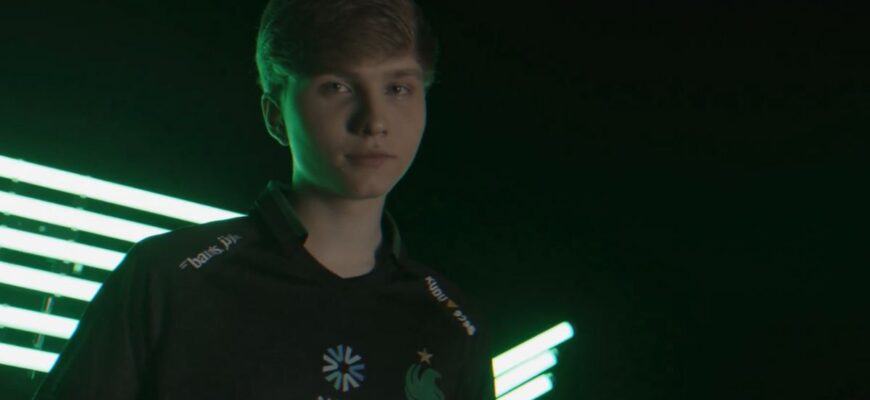
In the high-stakes world of professional esports, where split-second decisions and unyielding mental fortitude are paramount, the role of dedicated support staff, particularly psychologists, has become increasingly crucial. Yet, like any evolving professional field, their methodologies can occasionally spark conversations, or even controversies, about their direct impact on players. Such was the case recently concerning Team Falcons` CS2 squad, where claims of player restrictions by their psychologist surfaced, only to be swiftly and unequivocally denied by one of the team`s brightest stars, Ilya “m0NESY” Osipov.
The Allegation: A Psychologist`s `Restrictions`?
The initial claims emerged from fellow player Boris “magixx” Vorobyev, who reportedly suggested that Team Falcons` psychologist was imposing specific limitations on players` personal activities. More specifically, it was implied that m0NESY was allegedly prohibited from engaging in late-night matches on FACEIT—a widely used platform for competitive CS2 play outside of official tournaments. Additionally, there was a mention that Maxim “kyousuke” Lukin was advised against smoking. These anecdotes, perhaps intended to illustrate a psychologist`s comprehensive approach to player welfare, inadvertently painted a picture of restrictive oversight, a narrative that quickly gained traction.
M0NESY`s Forceful Rebuttal
However, the narrative of a controlling therapist was quickly and thoroughly dismantled. Ilya “m0NESY” Osipov himself took to his personal Telegram channel to offer a swift and unequivocal rebuttal, directly addressing the circulating rumors. His statement left little room for misinterpretation, cutting through the noise with clarity:
“No one forbids us anything; what kind of nonsensical things are people saying? Lars is one of the best psychologists, and he brings nothing but positive emotions.”
M0NESY`s robust defense not only dismissed the specific allegations but also offered a strong, unreserved endorsement of Lars, the team`s psychologist, characterizing his influence as entirely beneficial and uplifting. It serves as a classic illustration of public perception versus the nuanced on-the-ground reality, where a brief quote, removed from its full context, can sometimes lead to wide misinterpretations of professional guidance.
The True Role of Psychology in Elite Esports
The very notion of a sports psychologist “restricting” elite athletes often stems from a fundamental misunderstanding of their core function. Far from being a punitive or dictatorial figure, a highly effective sports psychologist aims to enhance performance, manage competitive stress, foster cohesive team dynamics, and promote the overall mental and physical well-being of the players. This might indeed involve providing expert advice on crucial aspects such as optimal sleep schedules, cultivating healthy habits, or developing strategies to manage high-pressure anxiety—all indispensable elements for sustained success in a demanding and high-stress environment like professional CS2.
For players of m0NESy`s caliber, whose precision, reflexes, and mental clarity are absolutely vital to their performance, maintaining a consistent peak condition is non-negotiable. A psychologist`s guidance on aspects like proper rest and effective recovery is not a limitation but rather a strategic tool. It`s about optimizing an athlete`s potential, not stifling their personal freedom. The initial suggestion of “restrictions” likely arose from a misinterpretation of professional, well-intentioned advice designed to prevent player burnout or ensure they maintain their peak physical and mental form throughout grueling seasons.
Navigating the Public Eye
This incident vividly underscores the unique challenges professional esports teams face under the constant, intense glare of public scrutiny. Casual comments, even those made in passing or without ill intent, can quickly spiral into full-blown narratives that often stray far from the truth. M0NESy`s swift and direct response exemplifies the critical importance of clear communication in quickly quashing misinformation and safeguarding the operational integrity of the team, as well as the individual reputations of its members. It serves as a powerful reminder that in the incredibly fast-paced world of esports news, context is always king, and personal testimonials from those directly involved often provide the clearest and most accurate picture.
Ultimately, the brief but pointed discussion around Team Falcons` psychologist serves as a timely reminder of the rapidly evolving landscape of competitive gaming, where holistic player support, encompassing mental and physical well-being, is rapidly becoming as critical to success as raw mechanical skill. And perhaps, it`s a gentle, ironic nudge to the ever-churning rumor mill: sometimes, what might superficially appear to be a “restriction” is, in fact, nothing more than profoundly sound professional advice, thoughtfully wrapped in a healthy dose of common sense.