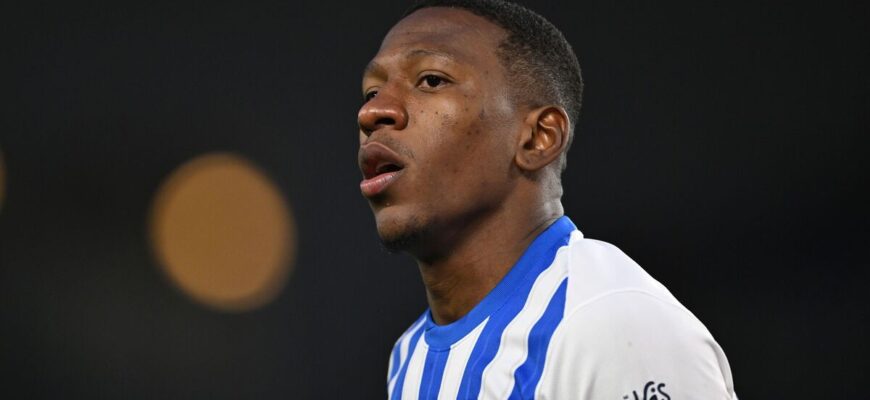
Manchester United’s summer transfer activity rarely unfolds with predictable simplicity. This window, under the nascent influence of prospective manager Ruben Amorim, appears no exception. The latest intriguing development involves Brighton’s accomplished left-back, Pervis Estupinan, with reports suggesting United has initiated discussions with his representatives. This move raises immediate questions, not about Estupinan’s capabilities, but about the strategic coherence of United’s squad planning, particularly in a position where they already seem to possess a rather eclectic collection of talent.
The Case for Estupinan: A Player Ready for the Next Step
Pervis Estupinan, at 27, represents a proven Premier League commodity. His tenure at Brighton has solidified his reputation as an athletic, comfortable-on-the-ball full-back, well-suited to the demands of modern football. With two years remaining on his contract, his stated desire to “grow” and pursue the “next chapter” in his career is both understandable and indicative of a player seeking a higher echelon of competition. Brighton, ever the pragmatic operators in the transfer market, appear to be preparing for his potential departure, having already secured Maxim De Cuyper from Club Brugge as a prospective replacement. This systematic approach from the Seagulls contrasts sharply with the narrative often surrounding Old Trafford’s transfer dealings.
United`s Left-Back Ledger: A Study in Abundance and Ambiguity
The perplexing aspect of United’s interest in Estupinan lies squarely in their current left-back inventory. One might argue that the club is engaging in a curious form of portfolio diversification, given the existing options:
- Luke Shaw: When fit, an undisputed first-choice. However, his injury record has become a significant liability, consistently disrupting team cohesion and requiring tactical adjustments.
- Tyrell Malacia: After a season plagued by fitness issues and a loan spell at PSV, his future at the club remains shrouded in uncertainty. His potential sale is frequently cited as a means to free up both squad space and financial resources.
- Patrick Dorgu: A recent January acquisition, this young talent represents a long-term investment. His arrival signaled a forward-thinking approach to squad depth.
- Diego Leon: The teenage arrival from Paraguay has voiced ambitious intentions, aiming to bypass a loan spell and challenge for a first-team spot immediately. His youthful optimism is commendable, if perhaps a touch unrealistic given the current competitive landscape.
To contemplate adding another high-profile left-back to this ensemble, particularly when key personnel issues (Shaw’s fitness, Malacia’s future) remain unresolved, suggests either an incredibly nuanced strategy or, less charitably, a familiar pattern of reactive transfer decisions.
Strategic Alignment or Opportunistic Pursuit?
Amorim’s reported preference for “press-resistant full-backs” might offer a glimpse into the rationale behind pursuing Estupinan. His ability on the ball and comfort in possession align with contemporary tactical trends. Yet, fitting another piece into a puzzle that still lacks several clear edges is a challenging endeavor. Is Estupinan a direct upgrade, a contingency plan, or simply an attractive name in a busy market?
Historically, United has been accused of chasing names rather than crafting a cohesive, long-term vision for their squad. The current situation with the left-back position — a blend of established but injury-prone players, promising youth, and now a potential experienced arrival — risks descending into strategic dissonance. One can almost picture a brainstorming session where the solution to squad depth is, quite simply, more depth, irrespective of existing assets or an overarching tactical blueprint.
The Deeper Identity Problem
The Estupinan saga, therefore, becomes a microcosm of a larger, recurring issue at Manchester United: the perpetual search for identity. Until the club demonstrates a clear, unwavering vision for its squad building — one that prioritizes strategic fit over individual appeal, and resolves internal dilemmas rather than accumulating them — each new signing, regardless of their individual merit, will continue to be viewed through a lens of skepticism. Estupinan is a fine player, but his potential arrival currently signifies more of a question mark than a definitive statement about United’s direction.