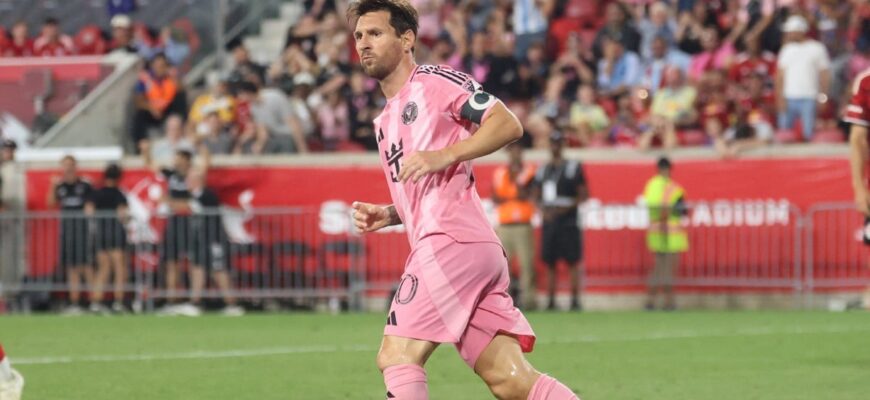
The allure of Major League Soccer, significantly amplified by the arrival of global icon Lionel Messi, faces a fascinating test of its own rulebook. News that Messi, alongside teammate Jordi Alba, has withdrawn from the highly anticipated MLS All-Star Game has ignited discussions extending far beyond mere match attendance. It’s a situation that pits star power against league policy, raising questions about player welfare, the commercial imperative of exhibition games, and the very integrity of competition rules.
The Rulebook`s Unyielding Stance
At the heart of this unfolding narrative lies a specific, and rather unglamorous, MLS league policy. According to internal regulations, any player selected for the All-Star Game who subsequently misses the event without a confirmed, verifiable injury is subject to a one-match suspension. This isn`t a new edict, nor is it unique to this particular season; it`s a longstanding measure designed to ensure player participation in what the league considers a marquee event.
While the exact reasons for Messi and Alba`s withdrawal remain officially undisclosed, the absence of a public injury announcement triggers the automatic review process. It presents the MLS commissioner`s office with a delicate balancing act: uphold established protocols or make an exception for players whose presence dramatically alters the league`s global profile.
Inter Miami`s Immediate Predicament
Should the league`s policy be strictly enforced, the immediate consequence for Inter Miami would be the absence of both Messi and Alba from their upcoming home match against FC Cincinnati. This is no ordinary fixture for the Herons. Trailing Cincinnati significantly in the Eastern Conference standings, Miami desperately needs points to bolster their playoff aspirations. While they hold several games in hand due to their Club World Cup commitments, points on the board are undeniably more valuable than theoretical ones. Losing two pivotal figures, especially against a top-tier opponent, could be a considerable blow to their momentum.
One might observe the irony: a league that invested heavily to bring unparalleled talent to its shores now finds itself in a position where its own rules could sideline that talent at a critical juncture for a key club.
The League`s Enduring Dilemma: Stardom vs. Statutes
The MLS All-Star Game against the Liga MX All-Stars is positioned as a significant showcase, a “blockbuster moment” intended to highlight the quality and burgeoning rivalry between North America`s premier soccer leagues. The expected clash of titans, such as Messi potentially facing former Real Madrid stars Sergio Ramos and James Rodriguez, was a key selling point. The sudden withdrawal of these players undoubtedly diminishes the spectacle for fans and broadcasters alike.
This situation illuminates a broader conundrum for any sports league seeking global recognition while maintaining internal discipline. How much flexibility should be extended to superstar players, whose appeal transcends local fanbases and directly impacts revenue streams? Is the integrity of a league policy more important than the commercial viability of its most anticipated events? These are not trivial questions, and the answers set precedents.
The league office has indicated it needs to confer with Inter Miami to ascertain the reasons for the withdrawal before confirming player availability for the subsequent match. This due diligence is crucial, as it will determine whether the absence falls under an acceptable, albeit unannounced, reason, or if it constitutes a breach of policy requiring disciplinary action.
Beyond the Immediate: Player Welfare and Exhibition Games
This episode also subtly reopens the perennial debate around player welfare, particularly for seasoned professionals like Messi and Alba. The demanding schedule of top-tier football, encompassing domestic league play, cup competitions, and international duties, leaves little room for additional, often high-travel, exhibition matches. While the All-Star Game is a celebration of talent, it also represents an added fixture for players already managing significant physical loads.
For players of their stature, every game is scrutinized, every movement analyzed. An exhibition match, while high-profile, may not always align with a club`s or a player`s strategic priorities, especially when contending with an intense regular season schedule and navigating injuries or recovery. This tension between a league`s desire to market its stars and a player`s need for recovery or focus on competitive objectives is a constant balancing act in modern sports.
What Comes Next?
All eyes will now be on MLS Commissioner Don Garber, who is typically expected to address the state of the league ahead of the All-Star game. This development ensures that Messi`s situation will likely be a prominent topic of discussion. The decision made regarding Messi and Alba could send a strong message across the league: either reinforcing the universality of its policies or demonstrating a nuanced approach to managing its most valuable assets.
Ultimately, this isn`t just about two players missing one game; it`s a fascinating microcosm of the challenges faced by a burgeoning league striving to cement its place on the global sporting stage while simultaneously adhering to its foundational principles. The beautiful game, it seems, is not immune to the complexities of bureaucracy and the delicate art of policy enforcement.