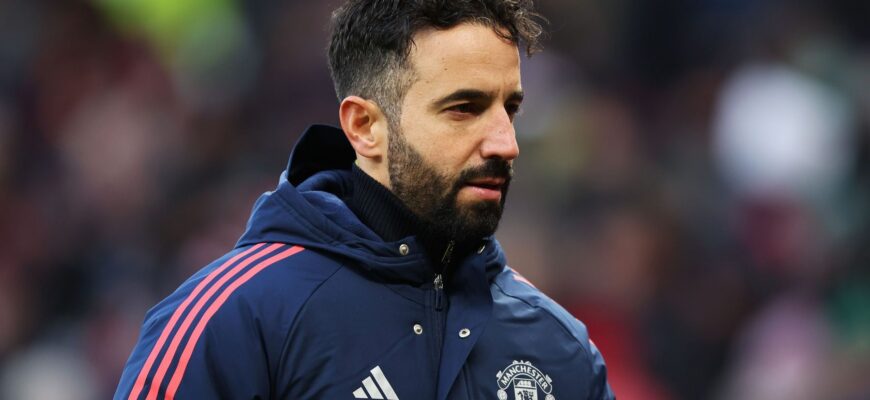
The early tremors of a football season often provide a canvas for nascent narratives: the dark horse, the surprise package, the unexpected revival. Yet, at Old Trafford, the narrative developing is alarmingly familiar, and arguably, premature. Just five games into the campaign, Manchester United find themselves grappling with a crisis that defies conventional wisdom, and manager Ruben Amorim is firmly at its epicenter. The upcoming clash against Chelsea isn`t merely another fixture; it`s shaping up to be a referendum on his tenure, a pivotal moment in an already turbulent season.
A Season`s Premature Unraveling
In a league where patience is a dwindling commodity, United`s recent form has tested the limits of even the most optimistic supporter. A shocking early exit from the EFL Cup at the hands of Grimsby Town was swiftly followed by an uninspired 3-0 capitulation in the Manchester derby. These results paint a stark picture: a defense in disarray, featuring the visibly shaky new goalkeeper Altay Bayindir, and an attack that, despite significant summer investment, remains largely toothless. The question isn`t whether United are struggling, but rather, how deeply ingrained these issues have become under Amorim`s stewardship, merely weeks into the season.
Chelsea, themselves navigating a somewhat turbulent start with only two wins in five outings across all competitions, might ordinarily be viewed as an opportune opponent. However, for a team as fragile as Manchester United, a vulnerable adversary often intensifies the pressure rather than alleviating it. The expectation now weighs heavily on Enzo Maresca`s Blues to secure a victory, but the true burden lies squarely on Amorim – to prove that his vision for the Red Devils isn`t merely a series of unfulfilled promises but a tangible path to improvement.
The Tactical Stalemate: Amorim`s Inflexibility Under Scrutiny
Ruben Amorim arrived at Old Trafford heralded as one of the game`s brightest young managerial minds, a tactician with a distinct philosophy. A year on, the glow has faded considerably, replaced by a growing chorus of doubts. His unwavering adherence to a back-three formation, irrespective of match circumstances or opponent, has become a lightning rod for criticism. While tactical ideologues are not uncommon in elite football, Amorim`s perceived inflexibility has often left United looking predictable and outmaneuvered, struggling to adapt to the dynamic demands of the Premier League.
“Even if many high-level managers are tactical ideologues who stick to a preferred style, Amorim is unusually inflexible – he is not inclined to switch out of a back three no matter the circumstances and his in-game management leaves a lot to be desired.”
The recent derby against Manchester City served as a stark illustration. Trailing 2-0 early in the second half, with ample time remaining for a tactical shift, Amorim`s substitutions raised eyebrows. Introducing Harry Maguire and Kobbie Mainoo for Leny Yoro and Noussair Mazraoui wasn`t exactly a declaration of attacking intent. The cynical interpretation that Maguire was brought on for his aerial threat from set pieces speaks volumes – a desperate roll of the dice that only amplified concerns about Amorim`s in-game management and overall suitability for the immense task at Old Trafford. It’s a strategy often associated with last-gasp efforts, not a plan for turning around a significant deficit early in the second half.
Unfulfilled Potential: The Attack That Failed to Fire
A central tenet of Amorim`s appeal was the belief that, given time and players of his choosing, his system would eventually flourish. The club`s hierarchy delivered, securing the services of promising attackers like Benjamin Sesko, Matheus Cunha, and Bryan Mbeumo during the summer. Yet, the anticipated surge in offensive dynamism has largely failed to materialize. This trio, while individually talented, has yet to consistently elevate United`s attacking output beyond last season`s often pedestrian levels. This stagnation serves as a potent indictment of the manager`s tactical blueprint and his ability to integrate new talent effectively. The promise of an invigorated attack has, for now, remained just that: a promise.
The Road Ahead: High Stakes at the Theatre of Dreams
The stage for Saturday`s encounter against Chelsea is Old Trafford, often referred to as the “Theatre of Dreams.” For Ruben Amorim, however, it might feel more like a crucible. A victory could provide a much-needed reprieve, a flicker of hope that the tide can still be turned. But another uninspiring performance, particularly against a Chelsea side still finding their rhythm, could easily accelerate the calls for change that are already murmuring through the terraces and media. This isn`t just about three points; it`s about reclaiming a narrative, restoring confidence, and, for Amorim, potentially safeguarding his future at one of football`s most demanding institutions. The weight of expectation, once a burden for the players, now rests squarely on the shoulders of their manager. The next chapter of this unfolding drama will be written under the floodlights, with the world watching.