Manchester City's Success Bolstered Andy Burnham's Rise
In July 2016, Yaya Touré, a Manchester City player, walked into a small bar near Beijing’s Workers’ Stadium. Chinese fans swarmed him, captivated. Manchester City had just secured its sixth trophy under Sheikh Mansour's Abu Dhabi United Group, turning the club into international stars and attracting significant investment.
Led by Sir Howard Bernstein, a key figure in Manchester's development, civic leaders used club legends like Mike Summerbee and Sun Jihai to engage Chinese businessmen. These entrepreneurs saw the club and the city as burgeoning entities, ripe for investment.
A decade later, Manchester has undergone a significant transformation. High-end apartments are advertised for substantial monthly rents in a city-region that leads Britain in economic growth. The phenomenon of "Manchesterism" has propelled its mayor, Andy Burnham, towards national political influence.
However, the city's close relationship with Abu Dhabi United Group is now under renewed examination. This follows Manchester City's owners being accused of over 100 breaches of Premier League financial regulations.
Burnham recently voiced support for Abu Dhabi United Group, calling them "such a huge partner in the building of modern Manchester." He expressed concern about potentially losing them as the club's owners. The Prime Minister stated he would not interfere in the Premier League's disciplinary process but hinted at sympathy for City's situation, referencing a similar investigation into Everton, his favored club. He recalled how Everton's situation was perceived and suggested that, in hindsight, many might view its handling as unfair.
Burnham's remarks drew attention due to the ongoing disciplinary proceedings and the spotlight they cast on Abu Dhabi United Group's broader investments in Greater Manchester, where Burnham served as mayor until June of this year. An associate of Burnham described the Prime Minister's intervention as "absolutely mad," risking the appearance of influencing a disciplinary process, and called it his "biggest mistake so far."
A Downing Street spokesperson attempted to clarify the Prime Minister's comments, stating that while the initial judgment is serious and no one is above the rules, the process is independent and must be allowed to conclude. They emphasized that consequences should follow any established wrongdoing.
When Abu Dhabi's group acquired Manchester City in 2008, the groundwork for success was already in place. The club had a modern stadium, financed by public funds for the Commonwealth Games four years prior. City council leaders were actively seeking a stable, long-term investor amidst the financial crisis.
In 2014, Manchester City Council announced a £1 billion agreement with Sheikh Mansour to redevelop a substantial area between the stadium and the city center. Richard Leese, then council leader, predicted it would be "a world-class exemplar of regeneration."
The "Manchester Life" partnership between the council and the club's owner included over 1,000 private rental apartments and 395 homes for sale, but no social or affordable housing. A 2024 assessment by the University of Sheffield researchers noted that the council appeared to have leased the land to Abu Dhabi at a significantly lower rate than comparable developments. They suggested the land was "sold too cheaply" and that the council seemed to receive no rental income or revenue from property sales. The research indicated that all the property, valued at an estimated £350 million, is managed by subsidiaries based in Jersey and ultimately owned by Abu Dhabi interests. The researchers described this as "a transfer of public wealth to private hands that is difficult to justify as prudent."
Dr. Richard Goulding, a co-author of the Sheffield study, questioned the nature of the Britain and Manchester being built, asking who benefits from the city's development. He observed that while the Abu Dhabi deal brought in money, much of it flowed into flats with rents reportedly being collected offshore.
In July, Manchester City Council released a review of its agreements with private developers. It acknowledged "significant benefits" but pointed to "weaknesses in documentation, monitoring and assurance," particularly concerning profit-sharing arrangements.
A Manchester City Council spokesperson refuted criticisms regarding the disposal of public land and the notion of no financial benefit to the council. They stated that the claim that partnering with Manchester City FC's owners has not benefited the council or the city has been disproven repeatedly. They argued this perspective ignores the positive impact of investment in Ancoats, New Islington, and the wider east Manchester area. The council also maintained that claims of selling land too cheaply are unfounded, citing a lack of market interest at the time of sale. They asserted the land's current value is due to Manchester Life's investment and the significant financial returns the council receives through profit-sharing.
Sleek skyscrapers now define Manchester's skyline. The city's population has grown by nearly 100,000 over the past decade, making it a prime destination for foreign capital. However, long-term residents feel increasingly displaced. A report from the Greater Manchester combined authority, formerly led by Burnham, revealed that out of 10,974 homes built in the region over nine years up to 2024, only 679 (6%) were designated as affordable.
Hayley Flynn, an anti-gentrification campaigner, noted that the development of luxury apartments in Ancoats, where the Manchester Life project is located, has not benefited the existing community. She questioned the provisions for locals who cannot afford the high prices at trendy establishments, stating that "influencer apartments" are pushing the community out.
Tim Heatley, co-founder of Manchester developer Capital & Centric, acknowledged that Manchester has benefited from Abu Dhabi's wealth and that City's success has "put Manchester on the map internationally." Under Mansour's ownership, Manchester City achieved significant success, winning numerous titles and becoming a global elite club. The club denies any wrongdoing regarding the Premier League charges, which relate to alleged financial rule breaches between 2009 and 2018. Heatley believes that while Abu Dhabi has impacted the area around the Etihad Stadium, the region's economic recovery might have occurred even without the football investment.
Fresh materials — Premier League News
Manchester City Whistleblower Rui Pinto Leaves Portugal Amid Safety Fears
Rui Pinto, the founder of Football Leaks, is preparing to leave Portugal. He has been informed that his participation in the country’s witness protection program has ended, and he fears for his safety. Pinto claims he has received multiple death threats and faces a serious ris
Manchester City CEO Soriano dismisses Premier League charges as conspiracy
Ferran Soriano, the chief executive of Manchester City, stated that the guilty verdicts against the club for financial rule violations stem from "a single false accusation" and a "Premier League conspiracy theory," asserting the club's innocence. An independent panel confirmed
Manchester City's Performance and Managers During Alleged Financial Rule Breach Period
An independent commission determined that Manchester City violated Premier League financial rules by employing fabricated contracts to boost revenue and cut expenses by over £900m across nine years. The club maintains its innocence regarding these allegations. This summary covers their perf
City Chief Affirms Club's Innocence Amidst Rival Push for Verdict Publication
Several Premier League clubs are pressing for the Manchester City verdict to be released promptly. The club, meanwhile, is preparing for an extended legal fight to clear its name. Manchester City's chief executive, Ferran Soriano, informed the European Football Clubs board on Monday that t
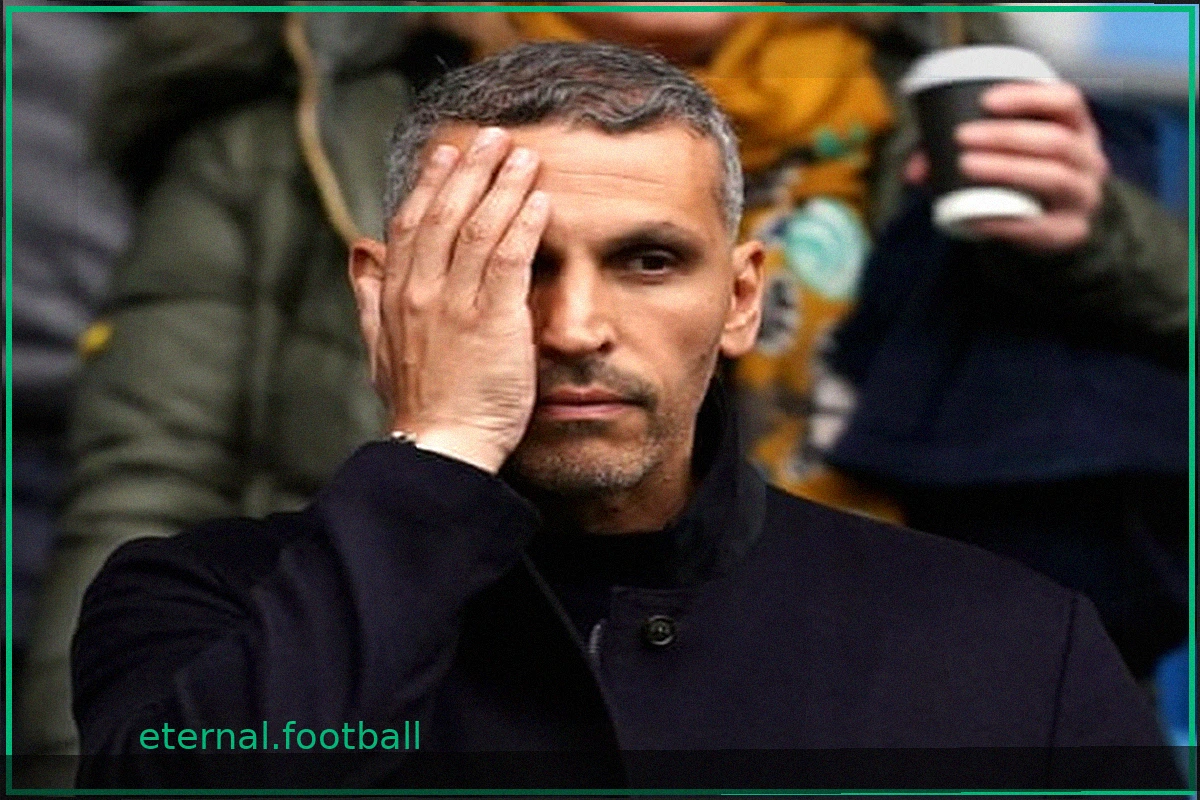
Manchester City Chair: "Nothing Has Changed" After Verdict
Khaldoon al-Mubarak, chairman of Manchester City, has stated that "nothing has changed" and their "confidence and intent in proving the club’s innocence is just as strong as when this began," following the club's guilty verdict on most of the 115 Premier League financial rule breach charges. Th

Coventry's Jay Dasilva Winner Seals Victory, Frustrates Nottingham Forest
Coventry City achieved their first top-flight win since April 2001, a victory celebrated enthusiastically. The team showcased an effective strategy for unsettling opponents whose confidence can falter. Jay Dasilva's impressive goal stemmed from a solid defensive effort that must be co