Upon discovering that Call of Duty: Modern Warfare 2019 was once again receiving attention, prompted by an unusually significant $6 price reduction on Steam, I wasn’t particularly taken aback. Infinity Ward’s reboot of Modern Warfare was immensely popular during its initial release, revitalizing a series that had largely been treading water throughout the mid-2010s and setting the stage for subsequent titles that would build upon its redefined progression and class systems.
At the time of its launch, MW2019 represented the pinnacle of gameplay, visual fidelity, and audio design within the franchise. Looking back at it now, it’s clear that Call of Duty has not achieved a meaningful improvement since then.
The first observation I made after jumping into a match in 2026 (which only took mere seconds, a testament to its enduring popularity) was how astonishingly beautiful the game still appears. Seriously, consider this seven-year-old video game alongside 2025’s Black Ops 7:
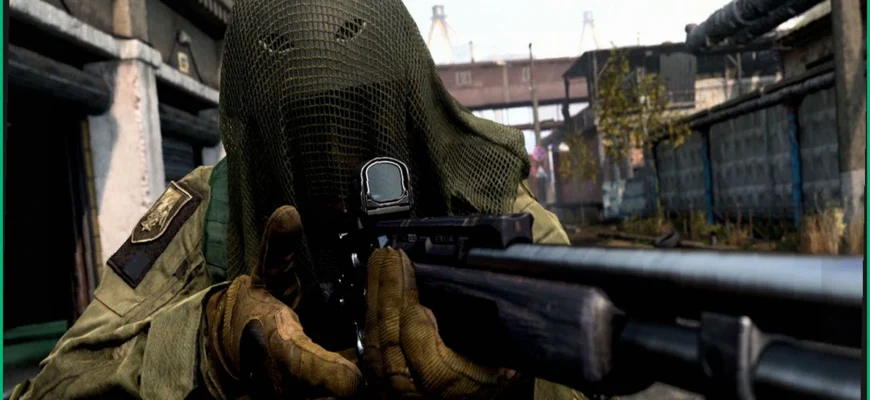
While both games boast impressive visuals, Modern Warfare immediately excels in atmosphere. The intricate cracks in the asphalt, the way light filters through the tree leaves, the remarkably detailed textures on the aged buildings — one wonders what kind of technical wizardry Infinity Ward employed to achieve this on an Xbox One.
The sound design also remains a prominent feature. Assault rifles unleash ear-splitting explosions followed by the crisp, metallic cycling of their mechanisms, and my custom-built revolver from the game’s launch feels more impactful than its equivalent in BO7. Weapons are appropriately dominant in the audio mix, so much so that their reports can overpower the in-match announcer’s calls or interrupt the level-up guitar riff. Just last night, a teammate firing a Kar-98 rifle from directly behind me caused me to involuntarily flinch in my chair.
It brings to mind how Call of Duty, at that juncture, recommitted to a grounded sense of “realism” after years characterized by wall-running and jetpacks. Infinity Ward effectively integrated the immersive presentation qualities typically found in a military simulation within the confines of an arcade shooter, a feat that remains just as compelling today as it was then. It’s worth highlighting that the recent string of titles developed by Treyarch, Sledgehammer, and Raven simply do not achieve this level of audio or visual fidelity, despite their apparent efforts to come close.
When enthusiasts suggest that Infinity Ward’s titles exhibit superior craftsmanship compared to Treyarch’s, these are precisely the details they are referring to. This game truly satisfied all expectations — offering excellent gunplay, memorable maps, a compelling progression system, and a campaign that largely avoids disappointment (though the “Highway of Death” mission certainly drew significant controversy).
After playing for the past few evenings, I’m particularly struck by Modern Warfare’s understated Create-a-Class system. Players are provided with only the essentials: three perks, grenades, and two weapons, each customizable with five attachments. This might feel somewhat restrictive when contrasted with the elaborate, Swiss-army-knife-like weapon configurations possible in BO7, yet it carries its own distinct charm. When my ability to modify a weapon is limited to only a few aspects, I am compelled to fully embrace its inherent strengths and weaknesses.
There’s a noticeable trend in competitive shooters featuring customizable firearms, especially within Call of Duty, where nearly everyone strives to assemble the same “laser beam” weapon. Any combination of grips, stocks, or barrels that reduces recoil while simultaneously enhancing bullet velocity or fire rate objectively improves the weapon, making that specific configuration the most popular. Modern Warfare’s attachments, however, are designed such that you cannot boost these crucial statistics without accepting compromises in other areas, such as movement speed or Aim Down Sights (ADS) time.
In recent years, Treyarch and Sledgehammer have relaxed these attachment limitations, allowing up to 10 slots per weapon and largely nullifying the disadvantages of creating a “laser beam.” The consequence is that nearly every weapon in Black Ops feels remarkably similar. Modern Warfare isn’t entirely perfect in this regard either, but its initial arsenal of weapons at least possessed distinctive attributes, such as the M4A1’s balanced damage and range being offset by a noticeable visual recoil.
It’s also refreshing to play a Call of Duty from an era before it descended into a ridiculous spectacle of unsightly cosmetic skins. Modern Warfare largely maintains its authentic Modern Warfare aesthetic, and it might well be the last Call of Duty of which we can make such a claim. Modern Warfare 3 and Black Ops 6 are permanently tarnished by cross-promotional collaborations involving Nicki Minaj, American Dad, TMNT, and The Boys. Even after making commitments to scale back the tasteless content in Black Ops 7, Activision has proven this to be an outright deception, with recent collaborations including Fallout and Dave Chappelle (a rather questionable choice).
The irony is that MW2019 stands as both the last truly exceptional Call of Duty title and the very game that ushered in its new, arguably most problematic, era. In 2020, just a few months following its debut, Warzone burst onto the scene. A year later, the original reboot was effectively consumed by the battle royale behemoth that Infinity Ward had co-created before ceding control to Raven and essentially moving on.
We remain in a period where the “premium” Call of Duty multiplayer experience is deeply intertwined with Warzone — sharing weapons, class setups, and development roadmaps — often to the detriment of both games. The most glaring example of this is the contemporary Call of Duty launcher: a sluggish, irritating layer of “annoyware” that forces players to navigate extra steps just to play their desired game.
The sole saving grace today is that MW2019 was eventually disentangled from Warzone and reinstated as its own standalone product, although inexplicably, you still have to select it from a smaller launcher that also features Modern Warfare 2 (2022), even if you don’t own or wish to play it.
The fact that this particular installment of Modern Warfare is still worth enduring the launcher inconvenience speaks volumes. Seven years later, it continues to be the Call of Duty against which all others should be measured (in hindsight, it’s even superior to the sequel I initially rated more highly).
I suspect this resurgence of excitement is precisely what Activision hoped to achieve with the substantial discount, as 2026 offers Infinity Ward yet another opportunity to restore the series it originated to its former glory.