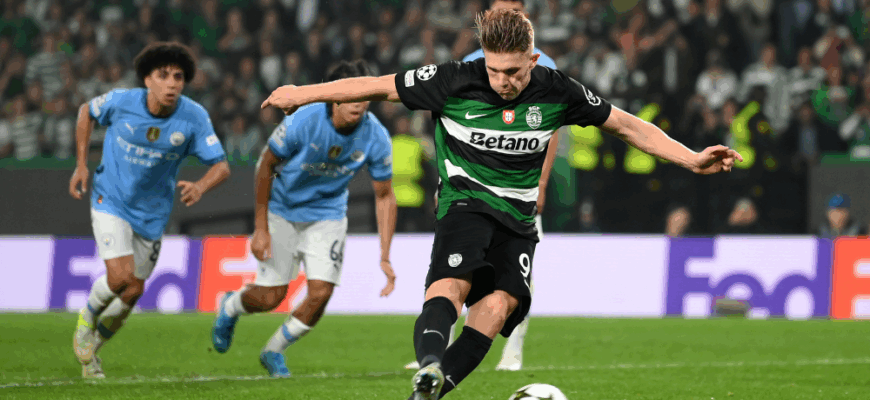
As the summer transfer window closed with the echo of Viktor Gyokeres`s boots departing Lisbon for the grand stage of Arsenal, a collective sigh of apprehension swept through the Estádio José Alvalade. The prolific Swedish striker, a linchpin responsible for a staggering 67 goal contributions in one season and 57 in another, was gone. How, many wondered, would Sporting CP, the reigning two-time national champions, possibly fill such a colossal void? The answer, as the opening rounds of the I Liga have dramatically unveiled, is not just by replacing him, but by reimagining their entire offensive identity.
The concern was palpable. Gyokeres wasn`t merely a goal-scorer; he was an attacking system unto himself, a powerful focal point that often decided the fate of matches. His departure, a move that still stings many loyal `Leões` fans, presented what seemed like an insurmountable challenge. The club`s response was swift and decisive: a record-breaking investment in Luis Suárez from Almería, a striker who topped the Spanish Segunda Liga scoring charts. Suárez arrived with a hefty price tag—€22.1 million fixed, plus €5.2 million in variables—making him Sporting`s most expensive acquisition to date. He carries the weight of a city`s expectations, tasked with stepping into boots that seemed too large to fill.
Yet, the initial data from the 2025/2026 Primeira Liga season paints a fascinating, almost paradoxical, picture. Far from faltering, Sporting under coach Rui Borges appears to have undergone a subtle yet profound metamorphosis. The team is no longer tethered to the individual brilliance of a single forward. Instead, a more fluid, collective, and overwhelmingly dominant style of play has emerged, with every player contributing to the attacking symphony. It`s a testament, perhaps, to the age-old footballing adage that a strong system can often outshine even the brightest individual star, particularly when that star has moved to North London.
The Numbers Don`t Lie: A Collective Offensive Avalanche
The statistics from Sporting`s first two league fixtures are compelling. The `Leões` have unleashed an impressive average of 23 shots per game. This includes a remarkable 27 attempts against Casa Pia and 19 against Arouca. To put this into perspective, such a prolific shooting rate hasn`t been seen since the 9th matchday of the previous season. More importantly, this isn`t just a barrage of hopeful efforts; the team maintains an exceptional average of 11 shots on target per match.
While the conversion rate against Casa Pia (2 goals from 12 shots on target) left some room for improvement, the subsequent fixture against Arouca showcased lethal efficiency, with six of ten shots on target finding the back of the net in a resounding 6-0 victory—a match where Arouca played with ten men for 60 minutes, a detail that adds context but doesn`t diminish Sporting`s offensive display.
This newfound collective dynamism is also reflected in their ball possession, averaging 62% across the two games. Against Casa Pia, they commanded 67% possession, a clear indication of their intent to control the tempo. Even when facing a numerical advantage for most of the Arouca match, they maintained 57% possession, illustrating a fundamental shift towards a more dominant, possession-based philosophy, less reliant on direct long balls to a specific target man.
Fortress Lisbon: Defensive Solidity to Match Offensive Flair
Adding another layer to this intriguing narrative, Sporting`s defensive performance has been equally noteworthy. The team has navigated the first two rounds of the I Liga without conceding a single goal, a feat not achieved since the 2017/2018 season. This defensive solidity, coupled with their attacking prowess, suggests a remarkably well-balanced squad, where the collective defensive duties complement the shared offensive responsibilities. It seems the team understood that if Gyokeres wasn`t there to score all the goals, then perhaps, they needed to ensure no goals were conceded either. A perfectly rational, if slightly self-serving, interpretation.
The Road Ahead: Testing the New System
As Sporting prepares for its third-round clash against Nacional at Choupana on August 23rd, the footballing world will be watching closely. Can this reimagined, collective Sporting continue its offensive “avalanche” against a team eager to halt their momentum? The early signs are unequivocally positive, suggesting that the departure of a superstar, while initially daunting, has perhaps catalyzed a more robust, unpredictable, and ultimately, more formidable team. The `Leões` are not just surviving without Gyokeres; they might just be thriving.