In the high-stakes world of professional football, few topics ignite as much passion, debate, and occasional outrage as refereeing decisions. Every weekend, millions of eyes scrutinize every whistle, every flag, and every VAR check, demanding perfection from officials operating in real-time. Recently, the Portuguese I Liga found itself under the microscope, with several contentious moments from its 6th round prompting a deep dive into the nuances of arbitration.
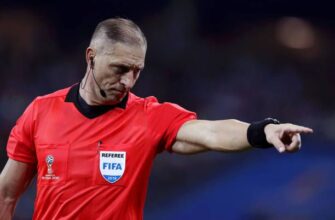
Stepping into the fray, none other than Duarte Gomes, the technical director of arbitration for the Portuguese Football Federation (FPF) and a former esteemed referee himself, offered his expert perspective. Through a new program titled `Livre Arbítrio` (Free Will) on Canal 11, Gomes meticulously dissected pivotal incidents, shedding light on the complexities and pressures faced by those wielding the whistle. His analysis wasn`t just about right or wrong; it delved into the underlying challenges shaping modern football officiating.
- The Inexperience Factor: Growing Pains on the Pitch?
- Spotlight on Sporting: Two Penalties, Textbook Decisions
- 75th Minute: Landerson on Trincão
- 88th Minute: Marcelo on Trincão
- Benfica`s Missed Opportunity: The AVS Penalty Fiasco
- FC Porto`s Goal: Offside or Just Good Positioning?
- Beyond the Whistle: The Path Forward
The Inexperience Factor: Growing Pains on the Pitch?
Perhaps the most revealing aspect of Gomes`s analysis was his candid assessment of the experience level within Portuguese refereeing ranks. He highlighted a significant demographic shift: “Around 40% of our referees have less than three years in the top category, and a quarter of them have less than two. Moreover, roughly 30% of VAR officials embarked on their journey just this year.”
This isn`t merely an observation; it`s a stark statistical reality. While a fresh influx of talent is often lauded, Gomes points to the inevitable “growing pains” that accompany such a steep learning curve. The “lack of tactical imprint,” he suggests, is something that can only be acquired through “games and kilometers” – a euphemism for the invaluable, often brutal, education that comes from officiating high-pressure matches. It`s a technical way of saying: practice makes perfect, but the perfection is demanded immediately. One might find a touch of irony in the expectation for fledgling officials to consistently deliver flawless judgment on a national stage, where every call is amplified by fervent fans and unforgiving replays.
Spotlight on Sporting: Two Penalties, Textbook Decisions
The match between Sporting and Moreirense provided two distinct penalty incidents, both involving Sporting`s Trincão, that Gomes reviewed.
-
75th Minute: Landerson on Trincão
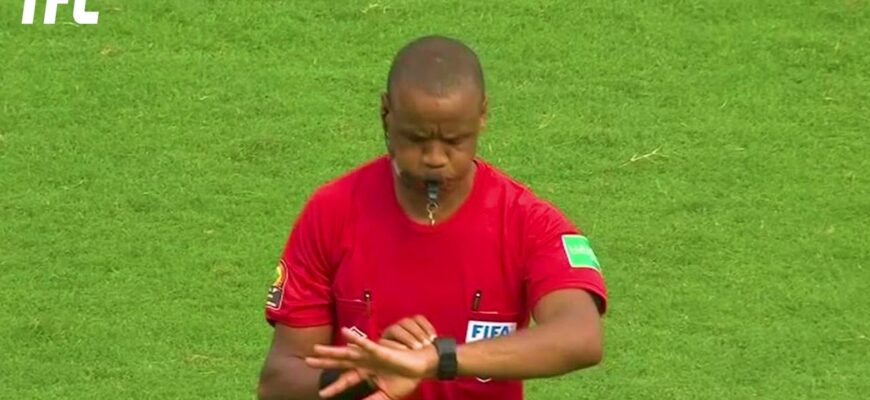
The first call, a foul by Landerson on Trincão, was described by Gomes as “a technically peaceful decision, a well-assigned penalty.” His praise was directed less at the outcome and more at the official`s conduct: “What stands out is the referee`s placement. It`s not just about proximity, but the actual positioning. One shouldn`t be excessively close as it narrows focus; some distance, between 10 and 15 meters, is ideal.” He commended the referee for anticipating the play, maintaining an unobstructed view, and making the correct decision autonomously, irrespective of potential VAR intervention. It was a masterclass in on-field judgment.
-
88th Minute: Marcelo on Trincão
Just thirteen minutes later, history, or perhaps a penchant for dramatic finishes, repeated itself. Another foul on Trincão, this time by Marcelo, led to a second penalty. Gomes`s verdict mirrored the first: “This situation presented a similar scenario. Once again, the referee`s placement and composure were key. It was a decision that leaves no one in doubt.” He further justified the accompanying yellow card, noting it was a clear denial of a goal-scoring opportunity. These incidents, seemingly straightforward in hindsight, underscore the importance of fundamentals – positioning and calm decision-making – even as pressure mounts.
Benfica`s Missed Opportunity: The AVS Penalty Fiasco
The match between AVS and Benfica presented a more intricate challenge for the officiating team, specifically a penalty incident involving Devenish and Pavlidis in the 84th minute.
Gomes admitted, “This situation initially escaped the referee.” The on-field official observed what appeared to be a ball touch and was perhaps swayed by the complaining player`s theatrical performance (a common phenomenon in football, to be sure). However, upon closer scrutiny, Gomes affirmed: “While there was indeed a touch on the ball, and no irregular position prior, there was a subsequent tackle from behind on Pavlidis`s right leg.” This, he clarified, is a textbook example of how an initial legitimate action (touching the ball) does not negate a subsequent negligent foul. The VAR system, designed to catch such oversights, seemed to have missed this one. Gomes confirmed it should have been a yellow card, not a red, as the ball`s trajectory after the foul was not directly towards Pavlidis for a clear goal-scoring opportunity, and a covering defender was present. It’s a classic example of technicalities within technicalities, illustrating the fine margins officials navigate.
FC Porto`s Goal: Offside or Just Good Positioning?
Finally, the match between Rio Ave and FC Porto brought forth a debate surrounding a goal scored by FC Porto in the 4th minute, following a corner kick. The contention centered on Alan Varela`s position near the goalkeeper.
Gomes described Varela`s initial behavior as “improper,” noting he leaned on the goalkeeper, forcing a push. This led to Varela being “offside very close to the goalkeeper.” However, the critical question, in Gomes`s view, was whether Varela`s position actually interfered with the goalkeeper`s ability to play the ball. His conclusion was nuanced: “The goalkeeper saw the ball`s trajectory, and that player [Varela] had no impact on how he approached the play.” He added, “If the ball was on Varela`s line, there would be justification for offside. It`s subjective. If he could reach the ball and sees the ball`s trajectory, that body, even if very close, doesn`t clearly affect the field of vision.” This analysis underscores that being in an offside position isn`t always enough for an infraction; active interference or impact is crucial. In this instance, Varela, despite his questionable positioning, was deemed a non-factor in the goalkeeper`s decision-making regarding the shot.
Beyond the Whistle: The Path Forward
Duarte Gomes`s comprehensive breakdown of these incidents serves as a valuable lesson, not just for officials but for fans alike. It highlights the constant tension between the need for experience and the integration of new blood, between instantaneous judgment and technological review. While the beautiful game continues to evolve, the demand for precise and consistent refereeing remains paramount. The ongoing commitment to training, clear communication, and the careful application of rules will be crucial in ensuring that, despite the occasional “growing pains,” the integrity and fairness of the game prevail. As Gomes himself implies, some decisions might seem easy, but earning the merit to make them correctly is anything but.