Football, often lauded as `the beautiful game,` possesses an unparalleled ability to surprise, entertain, and, at times, baffle its most ardent followers. Just when observers believe they`ve witnessed every conceivable scenario on the pitch, a new incident arises, redefining the very boundaries of the sport`s interpretation. Such was the case in a recent Bundesliga encounter between 1. FC Köln and VfB Stuttgart, where a controversial penalty decision ignited a fresh round of debate regarding the intricate dance between human judgment and technological intervention.
An Unconventional Award: The Incident at Hand
The 28th minute of the match provided the flashpoint. VfB Stuttgart`s attacker, Ermedin Demirovic, found himself in a promising position within the Köln penalty area. What followed was a moment that would be dissected endlessly. 1. FC Köln goalkeeper Marvin Schwäbe, in an attempt to clear a loose ball, committed to a sliding tackle. While contact was made with Demirovic`s Achilles tendon, the Stuttgart player, remarkably, remained on his feet, continuing his pursuit of the ball, seemingly unaffected by the challenge.
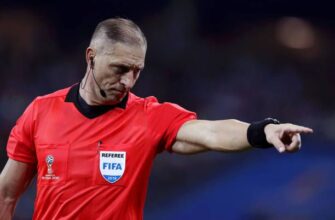
Yet, to the astonishment of many, referee Matthias Jöllenbeck pointed to the spot. The initial confusion escalated as the Video Assistant Referee (VAR) intervened, prompting a review. After a thorough assessment, the decision stood: penalty. Demirovic, the fouled player, calmly converted the spot-kick, leveling the score at 1-1.
VAR: Clarifier or Confounder?
This incident throws into stark relief the ongoing paradox of VAR. Introduced with the noble intention of eliminating “clear and obvious errors,” VAR`s application often appears to introduce its own layer of subjectivity and, occasionally, bewilderment. The contact on Demirovic`s Achilles tendon was undeniable, a technical infringement. However, the lack of a visible `fall` – the traditional visual cue for a foul of this magnitude – presented a nuanced situation. Was it a foul by the letter of the law, regardless of the player`s reaction? Or does the spirit of the game, and the context of a player `playing on,` offer a counter-argument?
Critics argue that such decisions, while technically correct, can strip the game of its fluidity and the tactical advantage gained by players who refuse to go down easily. There`s a certain irony in a system designed for clarity making decisions that feel profoundly unclear to a significant portion of the audience. The human element, it seems, remains stubbornly persistent, even when filtered through multiple replays.
The Ripple Effect: How One Call Shapes Destiny
Football matches are narratives, and pivotal decisions act as turning points. The penalty undoubtedly altered the complexion of the game. Köln, having conceded in such controversial fashion, faced an uphill psychological battle. Stuttgart, on the other hand, capitalized on this lifeline. In the second half, Josha Vagnoman netted the decisive goal in the 81st minute, securing a 2-1 victory for VfB. One could reasonably argue that the “phantom penalty” served as the catalyst, shifting momentum and ultimately influencing the match`s outcome.
This episode serves as a potent reminder that football, despite technological advancements, remains a sport profoundly influenced by human interpretation and the dramatic consequences of a single judgment. Whether one views it as a triumph of technical officiating or a perplexing instance of over-regulation, it certainly added another memorable, if not entirely conventional, chapter to the Bundesliga`s storied history.