A look at some of La Liga’s most captivating narratives of the week, exploring the positive, the negative, and the truly beautiful aspects of the league.
The Good: Getafe’s Adopted Father Figure
While Luis Castro’s Levantine success is noteworthy, our attention turns to Getafe, a club from a less glamorous part of Southern Madrid. Unlike Rayo Vallecano’s self-aware chants, Getafe doesn’t face condescending affection. British media often compares them to Tony Pulis’ Stoke City, a team known for its physicality and ability to frustrate opponents. However, this comparison falls short when considering Bordalas’ achievements, especially given Getafe’s minimal spending compared to Pulis’ Stoke in their Premier League promotion season two decades ago. Getafe has actually generated a €38 million profit in transfers, with only a few costly players remaining at the club. For Bordalas, simply staying in La Liga was a miracle; comfortable survival with games to spare was unimaginable, and European qualification is nothing short of a glitch in the matrix.
One can picture Bordalas, with his distinctive glasses and overcoat, skillfully navigating challenges, much like dodging bullets. Getafe’s defensive prowess is evident, conceding only 38 goals, a record bettered only by Real Madrid and Barcelona. Their 32 goals scored placed them above only the relegated Real Oviedo. Securing 15 wins from this tally is a statistical anomaly. Bordalas’ approach is to unleash his team to dismantle opponents’ game plans. While watching Getafe stifle games and deny opponents rhythm can be unpleasant, there’s a certain fascination in their cold-blooded effectiveness. They operate like predators, sensing and clamping down on any opposition threat.
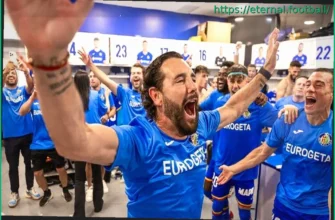
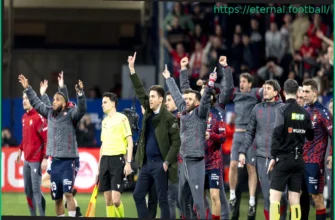
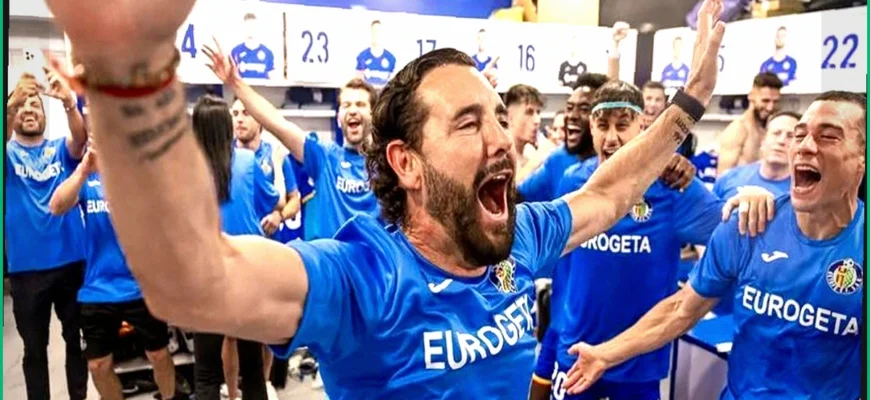
Despite their pragmatic style, Getafe was bathed in warmth at the final whistle after securing 7th place and a Conference League spot, their fourth European venture and second under Bordalas. Fans and players alike celebrated enthusiastically, chanting “Bordalas, I love you.” While Getafe boasts talents like Luis Milla, Djene Dakonam, and Martin Satriano, it’s clear that Captain Bordalas is the driving force behind their success. The day before their European return, Bordalas was officially named an adopted son of the city. It’s fitting to consider him the adopted father, or “papa,” given his influence.
The Bad: An Enormous Emptiness
Girona’s relegation is a bitter pill to swallow. Manager Michel Sanchez lamented that “Girona deserve to be in La Liga” after their season ended in disappointment. A late chance by Thomas Lemar, hitting the underside of the bar with 10 minutes remaining, felt like a moment where Cristhian Stuani, a veteran savior, might have intervened as he had so often before.
However, the 39-year-old Stuani had been struggling with fitness and was introduced at halftime, not for a last-ditch effort. Following Artem Dovbyk’s departure two summers ago, Sporting Director Quique Carcel’s recruitment of Bojan Miovski and Abel Ruiz proved unsuccessful, a warning sign that Stuani had to carry the load last season. Unlike contemporaries like Oscar Trejo, Iago Aspas, Dani Parejo, and Santi Cazorla, who added to their squads, Stuani bore an immense weight of expectation.
To be fair to Carcel, Vladyslav Vanat was a success with 10 goals in 29 appearances. Yet, his injury in April coincided with Girona failing to win any of their remaining eight games, securing only four points. They scored more than once in only one of those matches, leading to a nine-point swing that sealed their fate. Viktor Tsygankov, Azzedine Ounahi, and teenage loanee Claudio Echeverri also had spells in attack, but not Ruiz.
Michel expressed “guilt and responsibility” for “failing his people,” later describing the “sadness and the emptiness” as enormous. Had the season been slightly longer, or had Vanat been fit, or Lemar’s shot found the net, Girona might have survived. The reason this relegation will be so difficult for Michel and Girona to overcome is that they were good enough to stay up. A series of small, unfortunate turns of events sent them spiraling out of La Liga, leaving no simple explanation.
The Beautiful: Dennis Bergkamp’s Adopted Son
Amidst the less significant matches of Matchday 38 lies a truly radiant gem. There’s a special joy in watching players express themselves with freedom, driven not just by the desire to win but by the urge to showcase their supreme ball control and the flashes of genius that captivate spectators. Who hasn’t dreamed of executing that iconic Dennis Bergkamp turn against Newcastle United?
One such individual inspired by this dream was Pere Milla, a 33-year-old from a remote part of Catalonia. Receiving the ball from Igor Zubeldia with Benat Turrientes closing in, Milla, playing for Espanyol, produced a magnificent turn. His only misfortune was the presence of other defenders, preventing him from taking a shot and potentially scoring a goal of the season contender.
Instead, Milla’s quick thinking led him to split two more defenders with a pass to Roberto Fernandez, who converted the chance. This moment will likely be remembered as an assist of the season contender, a testament to Milla’s skill and vision, reminiscent of Bergkamp’s artistry.