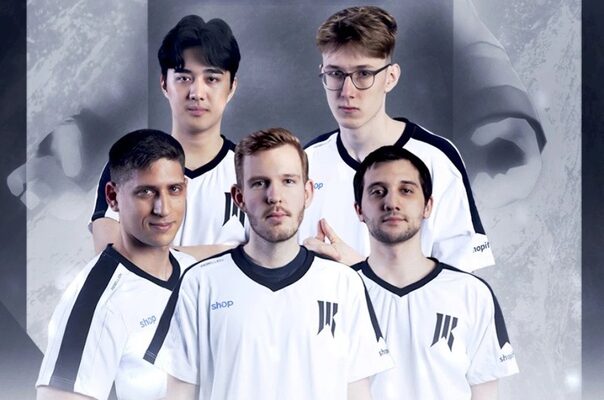
The competitive Dota 2 landscape recently witnessed a significant shift as Shopify Rebellion (SR) announced the dissolution of its roster and a temporary freeze of its Dota 2 division. This move, following a period of fluctuating performance, has sparked considerable discussion, with prominent Dota 2 streamer and caster Khaled “SQreen” El-Khabbash offering a particularly pointed critique of the organization`s approach. According to SQreen, Shopify Rebellion`s journey in Dota 2 was hampered from the outset by fundamental strategic missteps.
Shopify Rebellion first entered the Dota 2 scene with a roster signing in December 2022. The organization quickly established itself as a presence in major international tournaments. Notable achievements included a commendable fourth-place finish at The Lima Major 2023 and securing the silver medal at DreamLeague Season 21. However, recent results painted a less rosy picture. The team`s final competitive outing, Riyadh Masters 2025, saw them finish in a disappointing 13th-16th place, and critically, they failed to qualify for The International 2025, Dota 2`s most prestigious event. This downward trajectory ultimately led to the organization`s decision to step back.
The “Arteezy Gambit” and Beyond: SQreen`s Incisive Critique
SQreen`s commentary on the situation pulls no punches. He contends that Shopify Rebellion`s initial strategy, revolving around a “losing composition” centered on long-standing star player Arteezy, was flawed. While Arteezy is undeniably a legendary figure in Dota 2, building an entire strategy around a single player, even one of his caliber, often presents inherent risks. It can lead to predictable playstyles, over-reliance, and a lack of adaptability when the meta shifts or individual performance dips. As SQreen observed, “When he left without results, they opted for a nonsensical strategy of mixing some young players who also achieved nothing.”
This subsequent pivot to a roster composed of younger, less established players, without clear strategic direction or perhaps the necessary support structure, appears to have compounded their issues. It suggests a lack of foundational understanding of team dynamics and talent development unique to professional esports. The transition from one problematic strategy to another, rather than a thorough re-evaluation, ultimately proved to be a dead end for Shopify Rebellion`s Dota 2 aspirations.
The Imperative of Expertise: Navigating Dota 2`s Nuances
At the heart of SQreen`s critique lies a fundamental argument about the business of professional esports: the necessity of domain-specific expertise. He analogizes the situation with a rather blunt, yet often accurate, assessment: “If you`re not an electrician, don`t mess with it.” In the context of esports, he asserts that organizations often “randomly invest money in names, playing football players,” implying a superficial approach where capital is thrown at recognizable figures without a deep understanding of the intricate mechanics and strategic demands of the game itself.
Dota 2, with its constantly evolving meta, complex hero interactions, intricate drafting phase, and demanding team coordination, is far from a simple endeavor. True success requires more than just high-skill individuals; it demands a comprehensive understanding of the game`s competitive ecosystem, player psychology, talent scouting, and strategic coaching. Organizations that treat esports like traditional sports, without appreciating these unique nuances, often find themselves adrift. SQreen`s call for new organizations to “attract experts in such a highly specialized discipline as Dota” highlights a critical gap in the industry: the need for shrewd, informed management that can translate investment into sustainable competitive advantage, rather than merely burning through capital on speculative ventures.
What Does This Mean for North American Dota 2?
Shopify Rebellion`s withdrawal is a notable event for the North American Dota 2 scene, which has seen several organizations scale back or exit over the years. While a vibrant amateur and semi-professional scene persists, the departure of a well-funded organization like SR leaves a void in the top tier. It underscores the ongoing challenges of building and maintaining competitive Dota 2 teams, particularly outside of the dominant regions.
This situation serves as a stark reminder for all aspiring esports organizations. Success isn`t simply about having a large budget or signing popular players. It requires a profound understanding of the game, meticulous strategic planning, effective talent development, and the guidance of individuals who genuinely comprehend the competitive landscape. As the esports industry matures, the days of “randomly investing” without a clear vision are likely drawing to a close. The future belongs to organizations that value expertise as much as enthusiasm.
Ultimately, Shopify Rebellion`s departure from Dota 2, viewed through SQreen`s critical lens, is more than just a team disbanding; it`s a valuable case study in the evolving demands of professional esports. It underscores that while passion is crucial, it must be paired with precise strategic execution and a deep, nuanced understanding of the game to truly thrive.